

While watching a black and white film about Pomo elder and master basket weaver Elsie Allen at the Santa Rosa Junior College Multicultural Center, in Santa Rosa California, I was struck by something Elsie said. She explained that up until her grandmother’s time the baskets that master basket weavers of her tribe made were buried with the weaver or burned at their death. But her mother, Annie Burke, asked her not to do that with her baskets. Annie could see that the craft was being lost. If the baskets were buried with her no one would remember or have baskets as reference and the lineage of basket weavers in her tribe would die.
That was Elsie’s call to action. She decided to save this basket weaving lineage in her tribe. She would also introduce non-Indians to this art if that is what it would take to not let it die.
 When I heard that, my heart sank. How fast lineages can be lost. Lineages that have been carried and passed down for centuries, even millennia, can be lost in one generation. Lineages of cultural traditions including arts and crafts, lineages of spiritual practices and beliefs, lineages of healers, lineages of plant wisdom, and storytellers. How many have already been lost?
Though lineages can be lost quickly, it takes much time and effort to recover and restore them. I felt in awe of Elsie Allen and all she managed to do to continue the lineage of basket weavers for her people and for the general public.
In order to save the lineage, Elsie had to be willing to allow it to change.
Elsie Allen took some flak for this, for breaking with tradition and not burying or burning baskets at death, and for teaching white people the craft, but she didn’t let it stop her. We owe her a debt of gratitude for sure. Many people told her to just let it die, “Let the baskets die with the people,” but she disagreed. She felt strongly that the baskets should go on.
Her mother began the crusade in her lifetime.
Annie Ramon Burke (1876-1962)
Annie Burke of Cloverdale and Hopland, California, was taught how to make baskets by her mother, Mary Arnold, and her grandmother Gunsissie. Annie was well-known and esteemed for her basketry. Together with other Pomo women, in the 1940s, Annie formed the Pomo Mother’s Club which later became the Pomo Indian Women’s Club.
“This Mendocino County organization promoted the social, physical and financial health of Pomo people through education, social networking, and fundraising. Basketry exhibits and demonstrations proved to be an effective medium for educating non-Indians about Pomo traditions”(RYR 33).
Annie began to see how beneficial this was and could continue to be for her people, but she also saw how, because of the long-standing tradition of burying or burning the baskets, they did not have many to show. They ended up borrowing baskets from white collectors for their shows. This is part of what compelled her to give Elsie the edict.

Coiled Basket, Artist: Annie Burke. Three rod coil with willow foundation, patterns in dyed bulrush and sedge grass with woodpecker feathers. Elsie Allen collection SRJCMM
Passed down through the mothers
In her youth Elsie Allen was also taught the art of basket weaving by her mother and grandmothers— from finding and harvesting her own materials in nature, curing and treating them— to making all the different styles of baskets common to the Pomo people. Most of the baskets that Elsie was taught to make were utilitarian. Storage baskets, fishing trap baskets, acorn baskets, sifting baskets, gathering baskets and pounding baskets. Before colonization, baskets were not made for decorative purposes.
In a filmed Interview with Elsie Allen at Ya-Ka-Ama, 1980, on the museum website, Elsie explains how each woman had her own way of making dyes from acorn, black walnut and more. They also had their own places to gather their materials in the wild which they cultivated and tended to year after year. She also explains how the patterns woven into the baskets all mean something but by her mother’s time those meanings had been lost.
While raising four children Elsie stopped making baskets but her mother was confident she would pick it up again later in life. The few baskets Elsie Allen had made in her youth were buried with other people when they died. All of her grandmother’s baskets were buried as well. Elsie was discouraged by seeing this happen.

Annie Burke teaching a young girl basketweaving.
“Mother told me that she did not want this to happen with her as she wanted me to have her baskets help me when I started up basketweaving again. So I promised her I would do this. Mother showed baskets for seven years. She showed baskets at the Boonville Fair, and around. She liked people and noticed how people liked the basket displays. She wanted me to travel and meet people through the baskets and not destroy her baskets and have nothing left for me and others in the future. Mother died in 1962, and I have tried to keep my promise”(PB 13).
At age 62, Elsie Allen found the time to begin again. She began to weave and teach and travel all over the country exhibiting baskets while educating about her people and their culture. She also wrote Pomo Basketmaking: a supreme art for the weaver, a history of Pomo basketweaving and instruction manual which she published in 1972.
Elsie was not a medicine woman. A medicine woman must fast when she makes baskets and if someone makes a medicine woman a basket for her doctoring, then the weaver must fast while they do it. Fasting is a big part of Pomo culture and is also required when making jewelry for a medicine person or during important spiritual ceremonies.
Read Nasty Women Writers piece on Pomo Medicine Woman Mabel McKay:
Mabel McKay (1907-1993): “Dreamer” And Master Basket Weaver Of The Northern California Pomo Indians
In the same interview Elsie explains that the feathered baskets that became very popular with collectors were “in old days made with mallard duck, meadowlark and oriole feathers and only made for chiefs.” The basket was brought out four times a year at the big feasts where they would invite other people to their village to celebrate. The feather basket was brought out as an offering to the spirits. It was left empty. The offering was the presence of the empty feather basket.

Elsie Allen. Feathered Basket. 1976. SRJCMM
The position of chief was handed down in families and if there was no son it would go to a daughter. Elsie’s tribe of Russian River Pomo had their last chief in 1910. She believes the loss of chiefs is a large reason for the continued dispersal of her people.
When asked if it bothers her that currently people request, and weavers make, all kinds of baskets, including the feather ones, to use as decorative items in their homes, Elsie says it does not. To her the evolution and change are part of what were allowed the basket-weaving lineage to live. At the turn of the nineteenth century, many weavers began to make miniature and beaded baskets. These are now a large part of the Pomo basket weavers’ tradition as well.

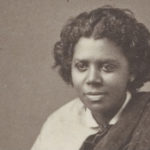
Elsie Allen in 1975
Elsie Allen was born near Santa Rosa, California in 1899, a time when white people had been there for 100 years. By the time she was born, there were only small bands of Russian River Pomo trying to stay alive by working for the ranchers.
Her grandfather was a singing doctor. He performed ceremony on her to protect her from most diseases which consisted of a fire ceremony and feeding her the hot blood of a cooked turtle. She believes this prevented her from contracting tuberculosis later when she tended to a sick girl with TB her own age in an Indian school. When Elsie was eleven, her mother was convinced by a government agent to send Elsie to an Indian school in Covelo. Before that, Elsie had no formal education and did not speak English. In the Indian school she was not allowed to speak her middle Pomo dialect. Only English.
Pomo is a broad term that was applied to a large group of diverse and unrelated people in Northern California.
“Before the coming of Europeans, an estimated 11,500 to 21,000 people, now generally grouped together under the name “Pomo,” lived in what would become Mendocino, Sonoma and Lake Counties. They spoke seven related but mutually unintelligible languages, some more different from one another than are the Germanic languages (English, German, Icelandic, Dutch, etc.). Within each of these languages were numerous distinct dialects, particular ways of speaking that identified a person’s village or community. These diverse people, who did not in any way think of themselves as a single cultural or political entity, belonged to over seventy politically independent groups—village states, they might be called”(RYR 13).
Susan Billy (b. 1951)
In 1974, a young woman showed up at Elsie Allen’s door asking her to teach her basket weaving. This was Susan Billy, Elsie Allen’s niece who grew up away from Northern California. Susan’s grandmother, Susan Santiago Billy, was a weaver as well and she had taught Elsie how to make feather baskets and other things. When she died Elsie was given her tools. Susan, the granddaughter, apprenticed with Elsie for sixteen years.

Susan Billy. Pomo coiled basket with feathers and shells beads.
“…and when I walked into her classroom…she had a basket making awl and knife in her hand, and she just held them out to me, and she said, “Here. These are yours.”And I looked at them and I could tell they were old, and she just looked, looked me right in the eye, and she said, “These had belonged to your grandmother, and when your grandmother passed away, they were given to me. . . I realized that I’d only been holding them for you”(RYR 51).
 Elsie taught Susan everything she knew as well as what Susan’s own grandmother had taught her. Susan became a master basket weaver in her own right as well as an activist for Pomo and indigenous women and arts, curating several museum exhibits including the one that is now permanently housed in the Santa Rosa Junior College Multicultural Museum. She also co-wrote the book Remember Your Relations: The Elsie Allen Baskets, Family and Friends. Susan’s baskets are now housed in museum collections as well.
In 1994 a high school was named after Elsie Allen in Santa Rosa, California. In 2003, The Santa Rosa Junior College Multicultural Museum acquired the show, Breaking Traditions, Saving Traditions: Elsie Allen and The Legacy of Pomo Basketry, as a permanent exhibit . Visit the museum here and view baskets, films, and more.
Elsie Allen is a Nasty Woman Writer, Artist and Activist.
© Theresa C. Dintino 2024
Works Cited
Allen, Elsie. Pomo Basketmaking.: a supreme art for the weaver. Happy Camp, CA. Naturegraph Publishers. 1972. 2007.
Abel-Vidor, Brovarney & Billy. Remember Your Relations: The Elsie Allen Baskets, Family & Friends. Grace Hudson Museum & Heyday Books. Berkeley, CA 1996.



 Donate

