
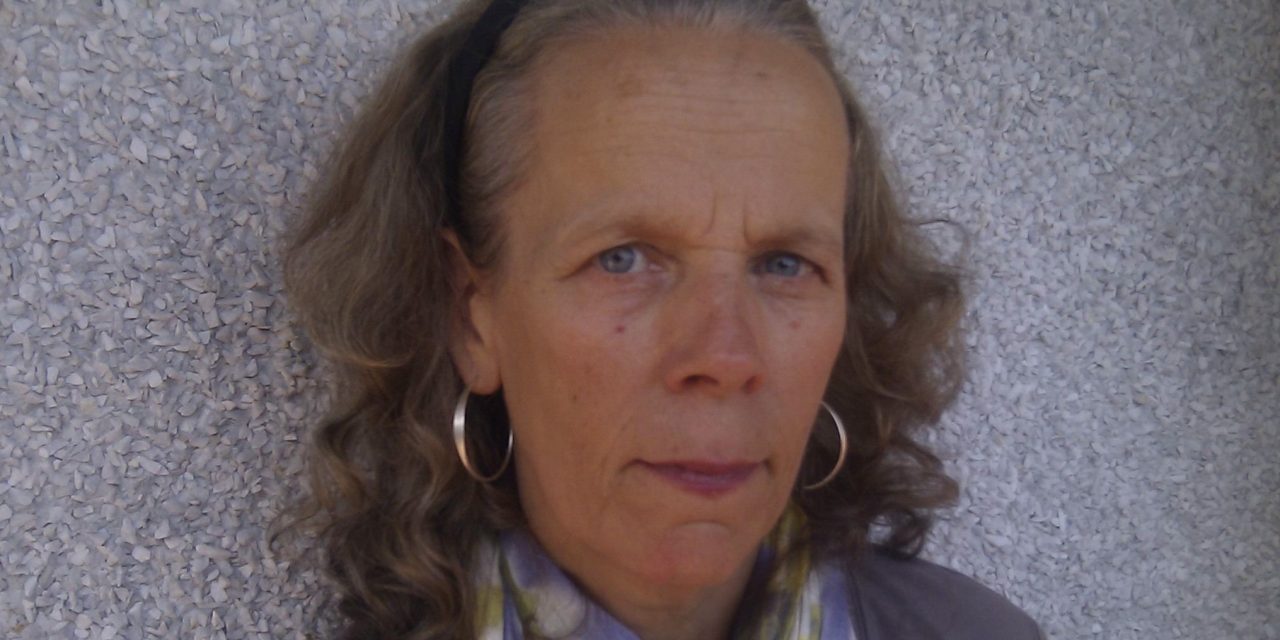
Most people have heard of the Vikings, the seafaring warriors of Northern Europe. Their travels to Iceland, Greenland and the American continent long before most believed contact was accomplished proved their prowess in navigation and traveling the turbulent waters of the north. Others are familiar with Norse Mythology: the flying Valkyries, god Odin and goddess Freya. But little has been known of the lives of ordinary or extraordinary Viking women until recently.
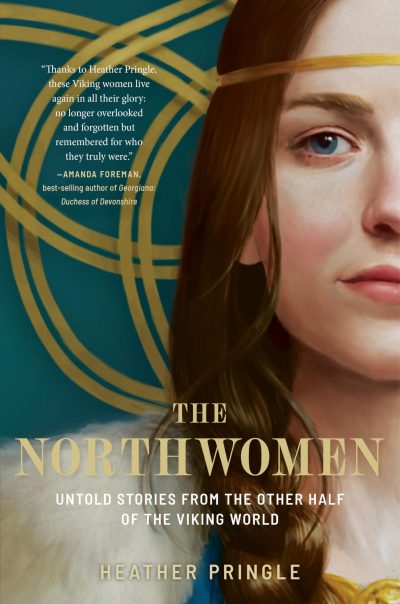
In The Northwomen: Untold Stories From the Other Half of the Viking World, Heather Pringle does an incredible job of gathering and telling the stories of these erased, ignored and unacknowledged women.
The chapter “Sorceresses and Demigoddesses” detailing the famous Oseberg burial of two high-status women in a Viking ship, is a powerful transmission. Then there is the chapter on recent revelations of the burials of Viking warrior women, which intrigue and astound.
But what is most remarkable about The Northwomen is that Pringle takes the time and care to include the story of the variety of ways women lived their lives in the Viking world. She does not only write about the “exceptional” women of the Vikings—the warriors and the sorceresses and Demigoddesses. She includes stories of women traders, ancestors, protectors, weavers, voyagers, and even the women the Vikings enslaved.
By looking into the myriad ways women lived their lives in Viking society, Pringle sheds light on all the ways women participated, contributed to, and created the culture of the Vikings. This is, of course, true of all cultures of the world. Women have always participated in, contributed to and helped create culture, but often what is seen as women’s work gets left out as unimportant and nonessential. Pringle’s model in this book is a great one for us to follow to be sure that when we talk about women who have been erased, forgotten, and unacknowledged, we include all women, not only the ones we call exceptional —meaning the ones who excelled at what are often considered male accomplishments.
In the case of the women weavers of the Viking age, it becomes clear that without the weavers, there would be no Vikings. And yet, women’s accomplishments in textile arts is are often overlooked and left out of stories of culture and history.
Read Nasty Women Writers post: NastyWomenWeavers: Elizabeth Wayland Barber’s Women’s Work: The First 20,000 years
The people called the Vikings made their presence known to the monasteries of England beginning in 750 CE with the first documented raid. The origin of the term Viking is unknown.
“But whatever its origins, the name stuck. Today, English-language speakers use the term to include anyone, male or female, who lived in Scandinavia during the time now called the Viking Age, which began in the mid-eighth century and wound down after the mid 11th century or so”(NW 17).
The Oseberg ship burial
Many Viking burial mounds have been found and uncovered. In them are graves of high-ranking people, sometimes even buried in a whole ship. Because of the elaborateness of the burial and the wealth of grave goods, these burials were assumed to be that of men. However, the Oseberg ship burial revealed the graves of two high-status Viking women.
I doubt we can fully imagine who these two women were. Pringle does a good job creating a picture from what was found in the burial and what is known from myth and history, but also acknowledges there is much more to this story and we must keep listening. The degree to which these and other powerful female leaders were erased leaves us with a vacuum within which we find ourselves at a loss to even understand or begin to describe.
An interesting feature of the book is fictionalized vignettes at the beginning of each chapter written by Pringle about the women we are to encounter in the following pages. These introductions are compelling and give an intimate framework for the facts to follow. I hope she is planning to write a fictional version of this book and these women.
Within a mound on a farm in Norway called Lille Oseberg, was exposed the burial of a complete Viking longship with an ornate pattern of repeating dragon-like beings carved along its prow and stern. Inside the ship were also carriages, three wooden sleighs, a high wooden throne, an ornate chest and a pouch full of cannabis seeds.
“But the inventory of treasures didn’t end there. Tucked away in the burial chamber, Gustafson and his colleagues found five intricately carved animal heads, each the work of a master artisan. In addition, the team collected hundreds of fragments of delicate cloth. Some were remnants of rich robes trimmed with silk that probably came from Central Asia and the eastern Mediterranean; others were segments of tapestries that had hung in the great hall of someone rich and powerful. Woven by Scandinavian women, those artworks portrayed warriors, shield walls, shape-shifters, sorceresses, ceremonial processions, and human sacrifices”(NW 35).
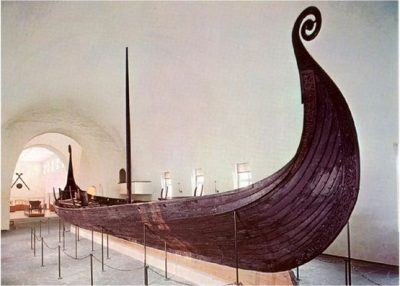
The Oseberg ship from 820 in the Viking Ship Hall in Oslo, Norway. Photo Museum of Cultural History
The fact that this burial housed two women has been known since 1907. This ship is now on display in the Viking Ship Museum in Oslo. Encountering this ship and learning about this burial twenty years prior to writing this book is what whetted Pringle’s appetite to know more about Viking women.

Oseberg Animal Head. Photo by Mike Fay, published on 06 February 2018
The bones of the Oseberg ship burial indicated that one of the women was a crone, almost 80 years old, which, for Viking women is beyond old. Most died at 40. The other woman was between 50-55 and may have been from Persia. Both seem to be women of privilege and high rank. Norwegian archaeologist Anne Stine Ingstad states:
“That the grave was so rich, so packed with ceremonial regalia and so unlike any other known Viking Burial that it may have contained a woman of extraordinary power—a woman who was at once a queen and a royal broker between the realm of humans and the world of gods and goddesses”(NW 44).
It is well known that some Viking women were sorceresses of magnificent prowess. They could raise a warrior from the dead on the battlefield, see into the future, and create smokescreens and other protections on the high seas. These women were most likely sought out and utilized by warriors as well as highly valued in the general culture.
They were identified by the possession of their magical staffs and box-like thrones that they sat upon to speak their incantations, spells and prophecy. They traveled with a retinue of women who performed chants that induced trance to open portals into the otherworldly realms. They were also herbalists and cast spells by throwing seeds upon a high-burning fire. These women passed the craft on to one another in a continuous lineage. Most likely groups of them travelled together and supported one another in the work.

Oseberg sleigh. Viking Ship Museum, Norway. photo by Helen Simonsson, published on 07 July 2018
These women are called Volva (sing) or Volur (pl) which translates to “wand wed.”
“The poetic language surrounding these tools suggested the varied ways in which a sorcery staff could be used. Metaphors often linked magic to spinning, suggesting that a sorceress placed the staff between her legs and spun it, as if spinning an invisible thread onto the rod. In the ancient Nordic world, people believed that a sorceress’s soul left her body as she entered a trance state. Tethered to her by only a slender thread, her soul was then free to roam the spirit world in search of knowledge. Later, to retrieve it, a volva had to reel it back in with her staff”(NW 50).
Though some believe burying people in ships was a metaphor for sailing to the otherworld, Pringle reminds us that many cultures, including the Vikings, believed that a seer could still offer oracle after her death at the site of her burial. This burial mound in Oseberg may well have remained a place of oracular power long after these women were buried.
The women of the Oseberg burial were perhaps leaders of this spiritual lineage and it could be that many made pilgrimage to visit the grave to continue to seek oracle and protection and to honor them.
And perhaps these women were also leaders of the Vikings at a certain point in time. In the ancient world, leaders were also usually spiritual leaders. Whoever they were, they were certainly important to the people who honored them with such a burial.
Women weavers who made the Viking world possible
Viking Women were also farmers, running their own farms, merchants running their own businesses, and voyagers upon the seas, locating and settling new territories in Iceland, Greenland and even Vinland in Canada.
The chapter on the Viking weavers is truly astounding. Pringle details the importance of and vast amount of weaving the Viking women produced to support the excursions of the ships and to dress their husbands and sons — maybe wives and daughters—safely for battle.
“In 2016, archaeologist Morten Ravn, a curator at the Viking Ship Museum in Denmark, published an estimate of the total time required to construct two medium-size Viking ships, from keel to sail. Ravn based this estimate on projects documented by the museum staff. His calculations showed that spinning and weaving enough cloth for just one sail accounted for as much as 36.9 percent of the total number of hours logged by builders of an average-size Viking ship. This meant that just over a third of all the work that went into constructing such a ship was performed by women. And if the crew carried enough spare cloth to mend the sail—a practice recommended by one Old Norse text, King’s Mirror—that statistic climbed to 53 percent, more than half of all the necessary work.
But the women weren’t done there, they also produced a wealth of other high-quality gear for the raiders themselves, from heavy seafaring blankets to water-resistant clothing. And last but certainly not least, research now suggests that they made a surprisingly effective form of body armor”(NW 114).
Viking women invented new kinds of wool gathered from particular sheep and wove and stitched them together in such a way as to make them waterproof and arrow resistant. These are female-driven advances in textile engineering.

A modern sail made to emulate the Viking sails. Viking Ship Museum, Norway
So much wool was needed for the fleets of Viking warships that Pringle guesses that many of the females captured in the raids and kept or sold as slaves by the Vikings were used for just such a purpose. This is another version of women’s lives lived among the Viking people that Pringle explores in detail: the enslaved women. It is a tough chapter to read, but necessary if we are trying to be equitable and cover all the lives lived by women who were either Viking or captured and enslaved by them.
“It’s unclear today just how many women lived in bondage in Scandinavia during the Viking era. But one prominent researcher, university of Oslo archaeologist Jón Vidar Sigurdsson, has estimated that between 20 and 30 percent of Scandinavia’s population consisted of slaves by the beginning of the 11th century. If Sigurdsson is right, as many as 300,ooo men, women, and children may have lived in subjugation in Scandinavia by the end of the Viking Age”(NW 143).
Viking women warriors
And then there are the women warriors arising out of the earth more and more with each passing year and confirmed more and more with advances made with DNA analysis.
It was an article by Pringle in the March 2025 issue of National Geographic, “The Warrior Women of the Viking Age,” that alerted me to this book and subject. I have long been interested in burials of warrior women, aka Amazons. The piece has very compelling illustrations to go with the text. I highly recommend it.
The site of the grave detailed in the article is on Birka, an island west of Stockholm, the location of an active and enlivened Viking town and center of trade. The grave which had been excavated years earlier was only recently proven to be the burial of a woman.

Swedish History Museum model of medieval Birka. Photo: Szilas (Public domain)
First uncovered in 1877, complete with horse skeletons, weapons— including arrows, axe and sword, the burial became famous. Proving that this warrior was a woman has been both groundbreaking and controversial. Pringle posits that this important woman was not only a warrior but a military leader.
“From the start, the equestrian character of the grave stood out. Although the Vikings are best known for their seafaring abilities, prosperous families in the North bred horses for riding and for work on their farms, and their children became skilled equestrians. The Birka woman likely came from just such a privileged background. The hinged position of her skeleton suggested that she had been buried in a seated position—possibly on a saddle, whose wood and padding had rotted away over time, leaving only stirrups found by her feet. Moreover, one of the two horse skeletons on the ledge was bridled, as if ready to be ridden. In addition the grave contained other equestrian gear: iron crampons that could be fastened to a horse’s hooves for winter travel and what was likely a large curry comb carved from antler”(NW 219).
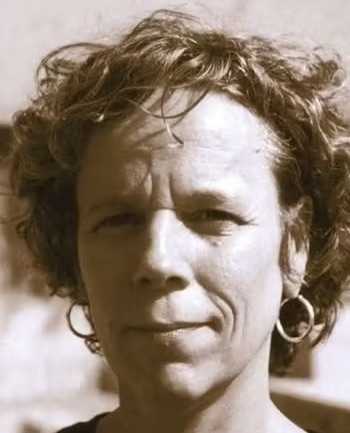 Heather Pringle is an award-winning author and science journalist who currently lives in Victoria, Canada. She has traveled extensively for her work and writes for many prestigious magazines. She is the author of four other books, and her website says she is working on a novel. Here’s hoping!!
“Other objects in the grave hinted at leadership abilities. In a bag on her lap, she had 28 gaming pieces and three dice. Near her skeleton were remnants of a playing board. It was a complete set for a board game that was popular in the ancient Norse world. Played by two, the game pitted an attacker against an evader, and it required both creativity and strategic thinking to win. In Sweden, archaeologists have found other complete sets of the game in lavish burials given to important pre-Viking Age warriors. There the sets seems to symbolize military acumen and leadership, and they may have carried a similar message in the burial of the Birka woman”(NW 220).
Identifying this burial as that of a woman warrior, and perhaps military leader, indicates that there are many more such discoveries to be found and, as with the other women covered in The Northwomen, continues to open new and powerful truths about women of the past.
Heather Pringle is a Nasty Women Writer.
© Theresa C. Dintino 2025
Works Cited
Pringle, Heather. The Northwomen: Untold Stories from the Other Half of the Viking World. National Geographic, 2024.
___________. “The Warrior Women of the Viking Age.” National Geographic Magazine, March 2025.





 Donate
