

Recently, I dreamed of a mountain—New Hampshire’s Mount Monadnock. In the dream, I was on a friend’s porch with a stunning mountain view. I couldn’t take my eyes off the mountain, even while others around tried to engage me. The dream then pivoted: my friend’s house became the general store. At this point, I was forced to shift my focus to the bizarre happenings in this dreamed-up store.
The next morning, I lay there playing the dream over in my head. The part about the mountain stayed with me.
Life has been rocky, and I sensed that the mountain offered some stability and comfort. I craved to read something meditative, preferably nature-based, and now with a mountain. That’s when I recalled Scottish writer Nan Shepherd (1893-1981), and her book The Living Mountain.
I first heard about Nan Shepherd in Kerri Andrews’ book, Wanderers: A History of Women Walking, which, being a walker, I thoroughly enjoyed. I wrote a post about it for this site, Wanderers: A History of Women Writers Walking, but out of the ten women that Andrews writes about, I covered only two, Virginia Woolf and Dorothy Wordsworth.
Now was the time to read Nan Shepherd’s The Living Mountain, and to revisit her chapter in Andrews’ book.
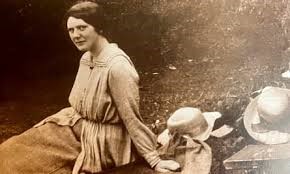 According to the Scottish Poetry Library, Anna “Nan” Shepherd was “by all accounts an inspiring teacher, with a feminist approach in her lectures, which was ahead of her time.”
She published three novels between 1928 and 1933, along with a collection of poetry, In the Cairngorms, in 1934. Although she wrote The Living Mountain in the 1940s, during WWII, it was not published until 1977, when Shepherd was in her eighties. The manuscript was initially rejected by a publisher, most likely because it was unlike the nature writing of the time; it was not about conquering nature or dramatic feats, but about observing and experiencing nature and one’s relation with it. Also, it was written by a woman and is considered partly memoir, neither widely accepted at the time.
Fortunately, Shepherd rediscovered the manuscript in a drawer 30 years later, and The Living Mountain is now considered one of the best and enduring works of nature-writing.
Going Inside
Nan Shepherd’s living mountain is the Cairngorm Mountain range in the East Highlands of Scotland, close by where she lived all her life. Shepherd was born near Aberdeen in 1893, and after graduating from university with a Master of Arts degree in 1915, she taught English literature at what is now Aberdeen College of Education for thirty-seven years.
Shepherd spent hundreds of days and many nights experiencing the Cairngorms, her greatest teacher. The Living Mountain is a reverence of place, a gem of nature writing, and a study of life itself.
When revisiting Kerri Andrews’ chapter on Shepherd, I wondered, shouldn’t one who tackles mountains be called a mountain climber or at least a hiker, rather than a walker? Though these are not overly high mountains, there are certainly summits requiring some strenuous climbs.
Kerri Andrews explains, “Thus it is that The Living Mountain has very little to say about mountain tops or spot heights; instead, it feels keenly the power of awkward, obscure places accessible only through determined pedestrianism”(184).
Determined pedestrianism, a conscious notch up from an average walker, does seem accurate. This determined pedestrianism leads Shepherd not only to scale the mountains but to access these awkward, obscure places within them. As she shares:
“But to toil upwards, feel the gradient slacken and the top approach, as one does at the end of the Etchachan ascent, and then find not spaciousness for reward, but an interior – that astounded me. And what an interior! The boulder-strewn plain, the silent shining loch, the black overhang of its precipice, the drop to Loch Avon and the soaring barricade of Cairn Gorm beyond, and on every side, except where we had entered, towering mountain walls”(16).
Without striving for the peak or even a particular destination, Shepherd comes to intimately know the vast surfaces of the range and the insides of caves and crevices. As Andrews says, “The hollows, caves, nooks and crannies of the mountain were, for Shepherd, essential to understanding the hills…Going into the mountain, Shepherd goes inside herself”(186), discovering the essence of the mountain and herself in relation to it.
Andrews, who lives in Scotland and has climbed these mountains, says this about Shepherd’s descents: “The bravery of this should not be underestimated: Shepherd makes clear in her descriptions of Loch Avon that accessing these interior spaces could be difficult and arduous, though her account is understated about her own physical gifts. In climbing into places like the Barns of Bynack, she was often undertaking a potentially dangerous physical challenge”(187).
One doesn’t get the impression from Shepherd that going into the mountain is as challenging as it is, but perhaps she doesn’t interpret it that way. Far from naïve about the risks, she’s aware that each step deeper into the mountain brings her closer to something she would otherwise not encounter. It’s these treks inward that reveal more of the mountain’s heartbeat and feed her soul in a way the peaks alone cannot.
Shepherd says in the very beginning of The Living Mountain, “Summer on the high plateau can be delectable as honey; it can also be a roaring scourge”(1). This dichotomy pertains to all engagements with the mountain. Some are euphoric, some disorienting, and, as she says, some are astounding. Each condition and experience, and her acceptance of it, deepens her relationship with the Cairngorms.
The heights, depths, and flats treat her fine-tuned senses to infinite awe and knowledge.
“The more one learns of the intricate interplay of soil, altitude, weather, and the living tissues of plant and insect…, the more the mystery deepens. Knowledge does not dispel mystery”(59).
Reverence of Place
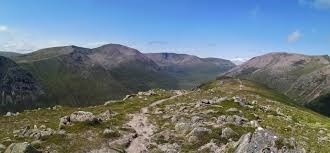 Shepherd never tires of her treks because each time she encounters the mountain, it presents something different, something fresh and unexpected, and she is keenly aware of these subtleties. Sometimes it’s the clouds, sometimes the colors, other times the wildlife, the winds, the formations of ice on the water, or any combination of these that greet her sharpened senses.
“One never quite knows the mountain, nor oneself in relation to it. However often I walk on them, these hills hold astonishment for me. There is no getting accustomed to them” (1).
The twelve chapters in the book are titled: Plateau, Recesses, Water, Frost and Snow, Air and Light, Life: The Plants, Life: Birds, Animals and Insects, Man, Sleep, The Senses, and Being.
The acute attention Shepherd pays to each aspect of the mountain and their interactions is enviable. In a world where multitasking and relentless distraction are full blown, such attention is a challenge to even imagine. It certainly cannot exist without intention and a generosity of time.
“So I looked slowly across the Coire Loch, and began to understand that haste can do nothing with these hills. I knew when I had looked for a long time that I had hardly begun to see”(11).
Over the years, with every encounter with the mountain, Shepherd is more in tune, more a part of this natural world:
“Well, I have discovered my mountain – its weathers, its airs and light, its singing burns, its haunted dells, its pinnacles and tarns, its birds and flowers, its snows, its long blue distances. Year by year, I have grown in familiarity with them all…I have been the instrument of my own discovering; and to govern the stops of the instrument needs learning too. Thus the senses must be trained and disciplined, the eye to look, the ear to listen, the body must be trained to move with the right harmonies. I can teach my body many skills by which to learn the nature of the mountain. One of the most compelling is quiescence” (90).
This seems to me a sort of pinnacle: Quiescence. The quality of the mountain that spoke to me in my dream that night. The stillness sensed and longed for. I doubt I will ever reach the peaks and depths that Shepherd discovers through a lifetime of communing with the mountain, but savoring her The Living Mountain offers testament to the transformative power of profound relations with nature.
Transformative Teachings
Shepherd reminds us that one doesn’t have to travel far to discover the world and one’s place in it. To return time and again to where we are called, and to do so with wonder and curiosity, peels back the layers to reveal the deepest truth:
“All are aspects of one entity, the living mountain. The disintegrating rock, the nurturing rain, the quickening sun, the seed, the root, the bird – all are one”(48).
To say this, to mean and know this, is the ultimate peak with the most pristine view.
“At the heart of Shepherd’s writing,” says Andrews, “is a careful and subtle articulation of the complex interactions between physical movement, introspection and the landscape that create meaning in a human life. There is more, though. For Shepherd, whose vital being was bound fast to her experiences in the Cairngorms, the mountain is living”(179).
To experience the living mountain and life for all it is, to recognize and embrace this reality, and to surrender to it: Is there a greater grasp of love and its partner, peace? It’s not what one takes or makes of it; it is, as we are.
“So, simply to look on anything, such as a mountain, with the love that penetrates to its essence, is to widen the domain of being in the vastness of non-being. Man [sic] has no other reason for his existence”(102).
Nan Shepherd is a Nasty Woman Writer.
© Maria Dintino 2026
Works Cited
Andrews, Kerri. Wanderers: A History of Women Walking. London: Reaktion Books, 2020.
Shepherd, Nan. The Living Mountain. Scribner, 2025.




 Donate
